The
"Stolen Brain"
Mystery:
How a 1955 Autopsy Revealed the Hidden Source of Human Intelligence
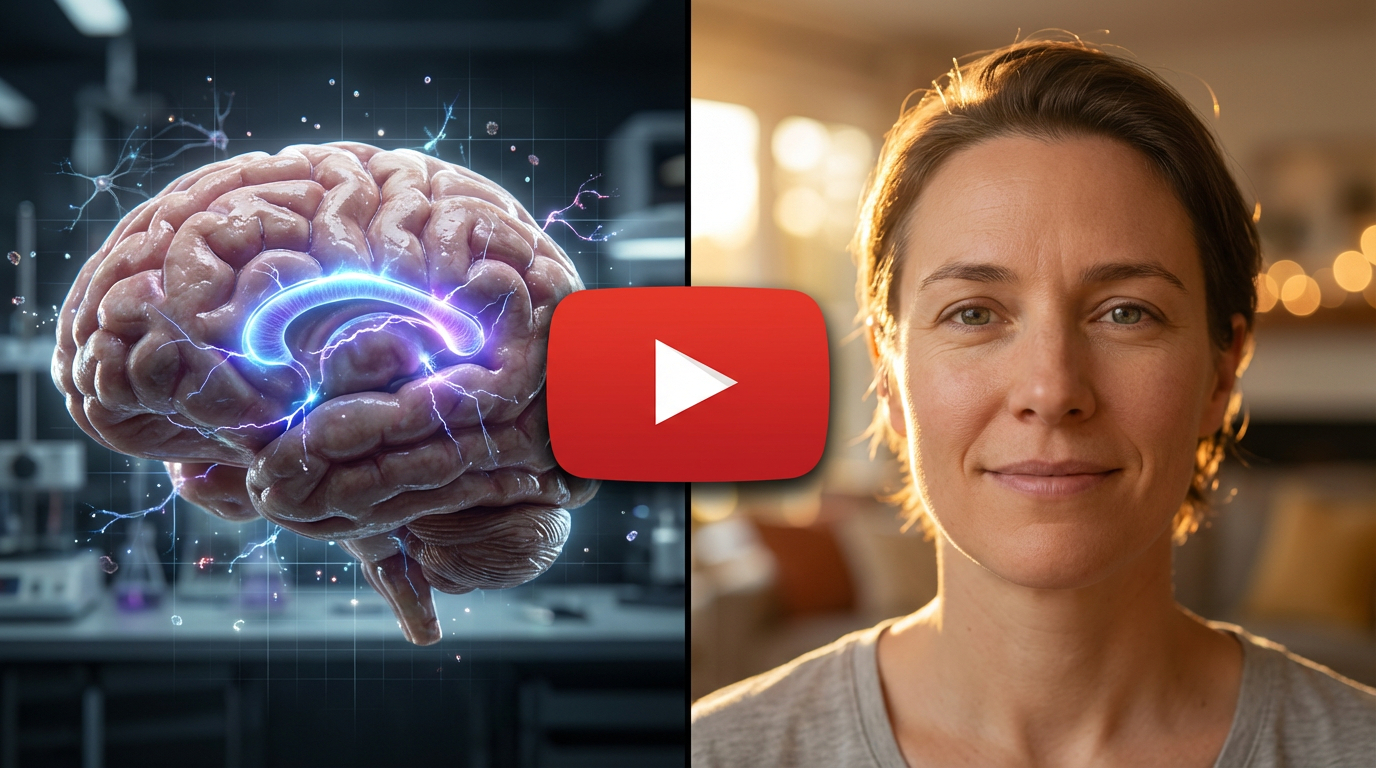
On April 18, 1955, the world lost its greatest mind. Albert Einstein passed away at Princeton Hospital, leaving behind a legacy of physics that redefined our understanding of the universe. But in the chaos of his passing, something strange happened.
A pathologist named Dr. Thomas Harvey performed the autopsy. Driven by a desperate curiosity to understand what made a genius tick, Harvey did the unthinkable: he removed Einstein’s brain, cut it into 240 blocks, and kept it.
For nearly 40 years, the brain of history’s smartest man was hidden away—stored in jars, moved between basements, and even kept in a cider box under a beer cooler. It sounds like the plot of a science fiction novel, but it is a documented historical fact.
Harvey believed that if we could just look close enough, we would find the physical source of genius. He was looking for a "key" that could unlock human potential.
He was right. But he was decades too early to see it.
The "Missing Link" in the Genius Brain
It wasn't until modern technology caught up with Harvey’s ambition that we learned the truth. When neuroscientists finally analyzed the samples using advanced imaging techniques, they were shocked by what they found.
They expected to see a larger brain. In reality, Einstein’s brain was actually 15% smaller than the average adult male's.
They expected to see more neurons. They didn't.
What they found instead was a specific structural difference that had nothing to do with size and everything to do with connection.
The researchers discovered that Einstein’s Corpus Callosum—the thick bundle of nerves connecting the left and right hemispheres of the brain—was significantly thicker and more developed than that of a normal person.
The "Genius Bridge" Phenomenon
To understand why this matters, you have to understand how the brain processes information.
- The Left Hemisphere is generally associated with logic, mathematics, linear thinking, and language.
- The Right Hemisphere is associated with creativity, intuition, imagination, and holistic thinking.
For most people, these two sides operate somewhat independently. We are often "left-brained" (logical but rigid) or "right-brained" (creative but disorganized).
Einstein’s brain was different. Because of that thick Corpus Callosum—what scientists have nicknamed the "Genius Bridge"—his brain was a superhighway of information. He didn't just think logically or creatively; he did both simultaneously. He could visualize complex physics equations like a musician visualizes a symphony.
This connectivity allowed for what psychologists call "Whole Brain Synchronization." It is the state of flow where problem-solving becomes intuitive and learning becomes rapid.
Can You Build a Better Brain?
For years, the scientific community assumed this was a genetic lottery win—that Einstein was simply born with a better bridge.
However, modern neuroplasticity research suggests otherwise. We now know that the brain is not fixed; it is malleable. Just as a weightlifter builds muscle fibers through tension, the brain builds neural pathways through stimulation.
Historians note that Einstein wasn't born a genius. In fact, he didn't speak until he was three years old and was labeled "slow" by his early teachers. But Einstein had a habit that he practiced religiously: he played the violin.
Whenever he was stuck on a complex physics problem, he would stop and play music. We now understand that this activity forced his logical left brain and creative right brain to communicate intensely, likely thickening that Corpus Callosum connection over decades.
But in our modern, fast-paced world, most of us don't have 50 years to master the violin to improve our cognitive function.
The New Science of Brainwave Entrainment
This brings us to the latest frontier in cognitive performance: Sound Frequency Stimulation.
Building on the discovery of the "Genius Bridge," researchers have been investigating ways to stimulate the Corpus Callosum without decades of musical practice. The focus has shifted to specific audio frequencies designed to encourage synchronization between the brain's hemispheres.
This method, often called "Brainwave Entrainment," uses specific sound waves to guide the brain into specific states of activity.
- Beta Waves: For focus and alertness.
- Theta Waves: For deep creativity and intuition (the state Einstein often drifted into).
- Alpha Waves: For bridging the gap between the conscious and subconscious mind.
A new development in this field, known as the "Genius Wave" protocol, utilizes a specific 6-minute audio sequence designed to target theta-state activity. The goal is to temporarily encourage the brain to synchronize its hemispheres, mimicking the neural patterns observed in highly creative and successful individuals.
Why "Ordinary" People Are Turning to Audio Stimulation
The appeal of this technology is its simplicity. In a world where people are exhausted by information overload, "brain fog," and stress, the idea of a passive, 6-minute daily ritual is gaining massive traction.
Reports from many users suggest that this specific audio stimulation may help with:
- Reducing "Brain Fog": By encouraging neural synchronization, users report feeling clearer and more alert.
- Enhanced Problem Solving: Engaging the creative right brain to assist the logical left brain helps users see solutions they previously missed.
- Flow State Activation: Many users listen to the track to kickstart their mornings, aiming to enter a state of high productivity without the jitters of caffeine.
While it won't turn you into a Nobel Prize-winning physicist overnight, the principle is sound: a better-connected brain is a more efficient brain.
The Verdict
The story of Einstein’s stolen brain taught us that intelligence isn't about the size of your hardware; it's about the quality of your software and connections.
Whether through learning an instrument, meditation, or utilizing modern audio technologies like the Genius Wave, the goal remains the same: bridging the gap between logic and creativity.
If you have been feeling mentally sluggish, uninspired, or simply stuck in a rut, it might not be a lack of intelligence. It might simply be a lack of connection.
Disclaimer: The information provided in this article is for educational purposes only and is not intended to replace professional medical advice, diagnosis, or treatment. Individual results may vary.